

Articles

Is Solar Worth It in San Diego in 2026?
Yes — but not the way it worked before 2023. SDG&E's average residential rate was about 45.7¢ per kWh in January 2026, among the highest in the country, so making your own power still beats buying all of it. The catch: new solar systems now earn only pennies for power sent to the grid at midday, so a battery is what makes the math work. In 2026, solar is a solar-plus-battery decision.

Can You Get a Home Battery Without Solar Panels in San Diego?
A home battery does not need solar panels. A grid-charged battery fills up when SDG&E power is cheapest (overnight, and since May 2026, weekdays from 10 a.m. to 2 p.m.), and runs your home through the most expensive hours, late afternoon and evening, instead of buying that power at peak prices. Your rate plan decides how much it saves, and the math is strongest on SDG&E's EV rate. On any plan, it keeps your home running when the grid goes down. One trade-off: a grid-charged battery can't be paired with the San Diego Community Power rebate.
Is a Home Battery Worth It With Solar and an EV in San Diego?
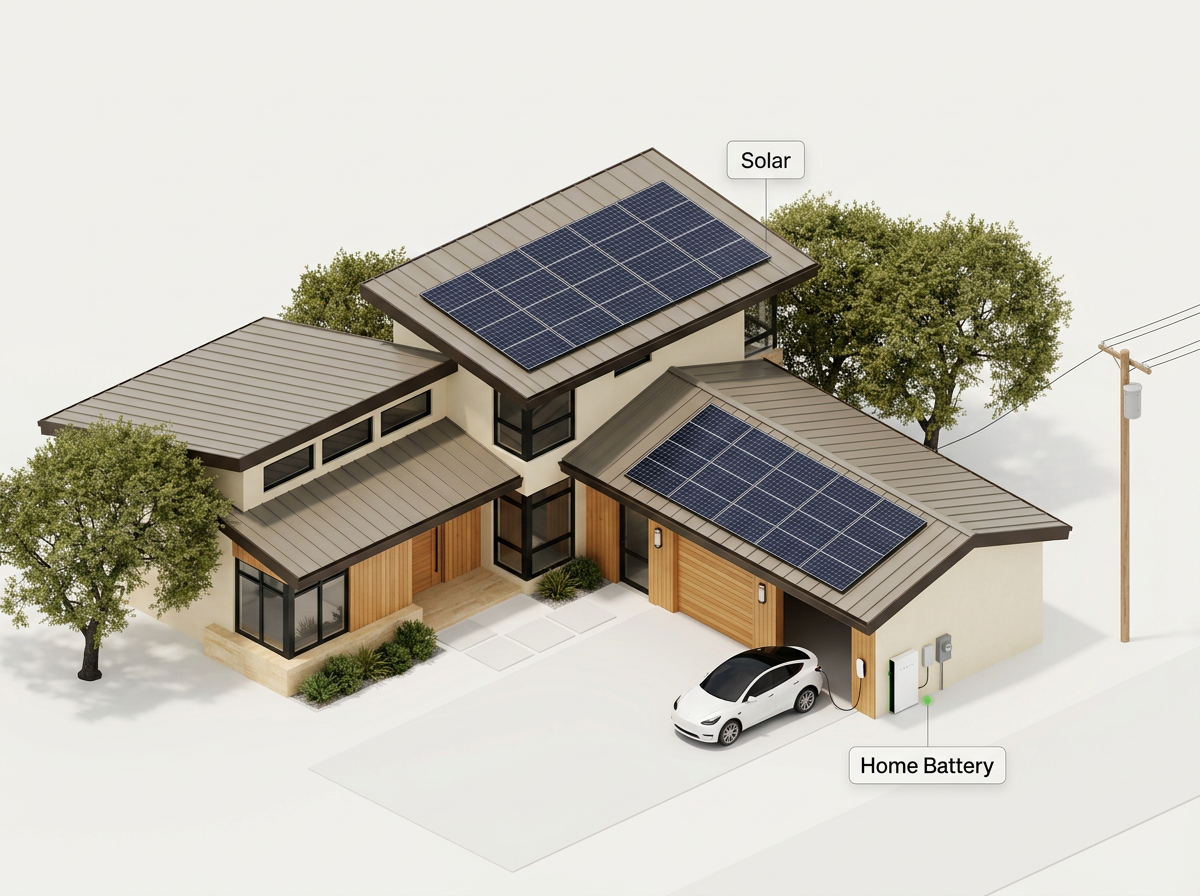
If you went solar before April 2023 (NEM 1.0 or 2.0) and have an electric vehicle on SDG&E's EV rate plan, the May 2026 rate change hit you harder than any other solar homeowner. The midday power your panels make now earns the cheapest rate of the day, about 13 cents in summer, while the evening power you buy back costs about 80 cents. A home battery is the fix, and solar-plus-EV is one of the few setups where the payback math can genuinely work.

Why Are Battery Incentives Available Now in San Diego — and How Long Will They Last?
Right now, three separate incentives can cut the cost of a home battery in San Diego nearly in half: an upfront discount worth roughly 20–35%, San Diego Community Power's battery rebate of up to $10,000, and a yearly performance check of about $150–$175 per battery. They exist because the grid has a real problem — too much solar at midday, not enough at dinner — and they're all funded in limited steps, not forever.

Your Net Metering Agreement Is Expiring in San Diego: What Happens Next
Your solar agreement lasts 20 years from the day your system was connected — then SDG&E moves you to the Solar Billing Plan automatically. Midday exports drop from a full retail-rate credit to nearly nothing (about 0–1¢ per kWh in spring), while dinner-time power still costs full price. Check your connection date: the clock is already running.

Why Is My SDG&E Bill Still High With Solar?
Your solar panels earn you the least when they produce the most. In April 2026, SDG&E cut the credit for midday solar power, while the late afternoon and evening hours — when your home uses the most power — stayed the most expensive. Your bill is climbing not because your panels stopped working, but because the rules for what your power is worth changed.